

Dr. Sumit Bapna · November 3, 2026
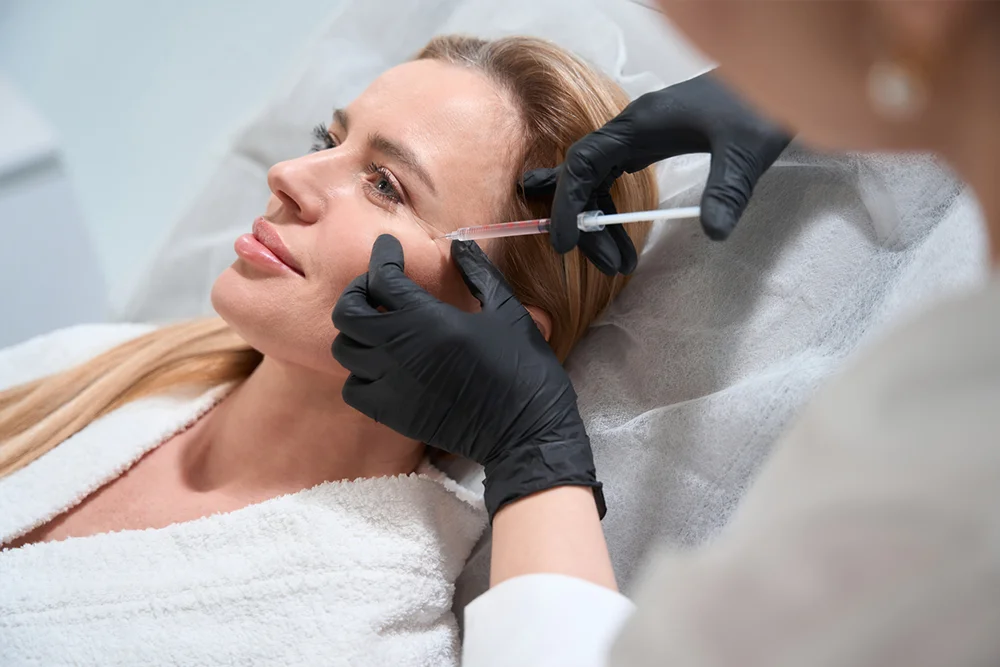
Botox, Dysport and Daxxify all do the same basic job: they temporarily relax the muscles that crease your skin when you frown, squint or raise your brows. What separates them is formulation, how long the effect tends to last and how many areas each one is approved to treat. Botox is the long-established option with the broadest cosmetic label, Dysport is a close relative measured in its own units, and Daxxify is the newest and is built to last longer.
The more useful question is not which one is best, but which one is best for what you want your face to do. Most people choose a neurotoxin the way they choose any product, by the name they have heard most often. This guide walks through the real differences, where the evidence is strong and where it is thin, and the questions worth asking before you decide.
Every clinical claim is backed by a label or published source, listed at the end so you can check it yourself. For the full range of options, start with our overview of neurotoxin injections.
Yes, but it is smaller than most people expect. Botox and Dysport are both botulinum toxin type A products that relax muscle the same way, and the differences lie in formulation, dosing units, approved areas and, for some people, how quickly they start working.
On the label, Botox Cosmetic is FDA-approved for frown lines, forehead lines, crow’s feet and platysma bands in adults, while Dysport’s cosmetic indication is frown lines in adults under 65, because efficacy was not observed in subjects 65 and older in its trials.
Onset is similar for most people. Botox’s prescribing information says muscle relaxation typically begins one to two days after injection and builds over the first week. In a split-face study of 90 people with crow’s feet, both products had worked by day 2, and Dysport showed greater improvement by days 4 and 6\. A gap that small rarely decides the choice.
You may also hear that Dysport spreads slightly more, which some injectors like for broader areas such as the forehead and treat with extra care near the brow. That is a clinical impression rather than a labeled difference, and it is a useful reminder that technique shapes a result as much as the brand does.
In practice both products are used for the same areas, and using Dysport beyond frown lines is off-label, which is common and a matter of injector judgment. Duration is similar on paper too: Botox’s label cites about three to four months for frown lines, and Dysport’s label says its effect may last up to four months. One small split-forehead study found Dysport lasted longer at a 2.5-to-1 dose ratio, but responses vary and neither label claims a difference.
Daxxify does last longer in clinical trials, but whether longer is better depends on what you want from a treatment. In the SAKURA phase 3 trials, wrinkle severity stayed at none or mild for a median of about 24 weeks, roughly six months, compared with the three to four months typical of Botox.
The manufacturer reports that at least half of patients in two pivotal trials still had none or mild frown lines at 24 weeks, and that some patients still had results at nine months. In the published trials, the median time to return to baseline was about 26 to 28 weeks. Those figures come from separate trials rather than a head-to-head comparison, so your own result may differ.
Daxxify is also approved for cosmetic use only for frown lines, and in the FDA’s review of the pivotal trials, response peaked at weeks 2 to 4\.
Longer-lasting is a trade, not a free upgrade. Consider what you would gain and what you would give up:
That is why many injectors suggest starting with a familiar product and moving to Daxxify once they know how your muscles respond. For someone who already knows they like their result and wants fewer visits, it can be a strong fit.
Both are FDA-approved for frown lines in adults, but Daxxify is designed to last longer, while Dysport is typically refreshed every three to four months. Their labeled frown-line doses also differ, at 50 units of Dysport versus 40 units of Daxxify, and those numbers cannot be compared directly.
The formulations differ too. Dysport contains human albumin and lactose and may contain trace amounts of cow’s milk protein, so it is contraindicated for patients with a cow’s milk protein allergy. Daxxify is stabilized with a peptide and is made without human serum albumin or human- or animal-derived components.
For most people, these details will not decide the choice. For patients with specific allergies or preferences, they can, which is one reason the decision belongs in a conversation rather than on a shelf.
The numbers do not match because each manufacturer measures potency with its own method, so a unit of one product is not a unit of another. Botox’s label says its potency units cannot be compared to or converted into units of any other botulinum toxin product, and Dysport’s label says the same.
You can see it in the labeled frown-line doses: 20 units of Botox, 50 units of Dysport, and 40 units of Daxxify. A bigger number does not mean a stronger treatment, and there is no label-approved conversion. Published studies have used ratios of roughly 2.5 to 3 Dysport units per Botox unit, but those are research dosing ratios, not equivalence.
So when you compare treatments, compare the area treated and the expected duration, not the unit count.
The table below puts the main label and trial facts in one place, and it shows how much the three have in common.
| Botox Cosmetic | Dysport | Daxxify | |
|---|---|---|---|
| First FDA cosmetic approval | 2002 (frown lines) | 2009 (frown lines) | 2022 (frown lines) |
| FDA-approved cosmetic areas | Frown lines, forehead lines, crow’s feet, platysma bands | Frown lines (adults under 65\) | Frown lines |
| Labeled frown-line dose | 20 units | 50 units | 40 units |
| Onset | Begins in 1–2 days; builds over the first week | Within days; in one split-face study it pulled slightly ahead by days 4 to 6 | Response peaked at weeks 2 to 4 in the pivotal trials |
| Typical duration (frown lines) | About 3–4 months | Up to about 4 months | Median about 24 weeks (roughly 6 months); some to 9 months |
| Formulation and label notes | Units not interchangeable with other products | Contains human albumin and lactose; may contain cow’s milk protein | Peptide-stabilized; no human serum albumin or animal-based components |
Start with what you want the treatment to do, because that narrows the choice faster than any brand name. These questions are a useful place to begin:
A skilled injector has a large influence on how natural a result looks, so the person choosing with you matters as much as the product they use.
At our office, trained injectors, including a PA, build each treatment plan with the patient. Dr. Bapna, a double board-certified facial plastic and reconstructive surgeon, also teaches other physicians advanced injection techniques. Because the practice offers all three products, a recommendation can follow your goals rather than a single brand.
Often yes, but tell your injector which product you had last and when. Dysport’s label notes that the effect of using different botulinum toxins during a course of treatment is unknown, so your injector will usually wait until the previous treatment has worn off.
The serious warning is shared, and the common side effects are similar, although the exact rates come from separate trials and cannot be compared directly. All three carry the same boxed warning about distant spread of toxin effects, and all can cause headache, injection-site reactions, and eyelid drooping.
Ask your injector how they minimize risk for your anatomy, and how many of these treatments they perform.
You can also expect results to arrive on slightly different timelines.
The right one matches your goals, your anatomy, and your tolerance for commitment, and there is no single winner. As a starting point:
If you would like to talk it through in person, our team can walk you through your options.
August 31, 2026
Chin augmentation is one of the most underrated procedures in facial plastic surgery. A well-placed implant can sharpen ...

April 8, 2026
Undergoing hair restoration is an exciting step toward renewed confidence, but understanding hair transplant recovery is...
Serving patients from Columbus, Cleveland, Dayton, and surrounding Ohio communities from our Dublin facial plastic surgery practice.

Call us at 614-876-6673 or fill out the form below to begin your facial enhancement journey.